Seleukeia (Lyrbe): the empty Roman city in the pine forest above Manavgat
A two-storey agora, nine-metre walls and usually nobody else there. Where Seleukeia is, why scholars call it Lyrbe, how to drive the forest track, and what an unattended site asks of you.
- Opening hours
- No gate and no fixed hours — it is an unattended forest site. Go in daylight.
- Entrance fee
- No ticket office in any account we trust. Carry a little cash in case a warden is on duty.
- Best time to go
- Spring and autumn mornings. In July and August go before 10:00 — there is shade under the pines, none in the agora.
- Getting there
- About 15 km north of Manavgat: tarmac to Bucakşeyhler village, then roughly a kilometre of narrow forest track. Own car, taxi or a private day.
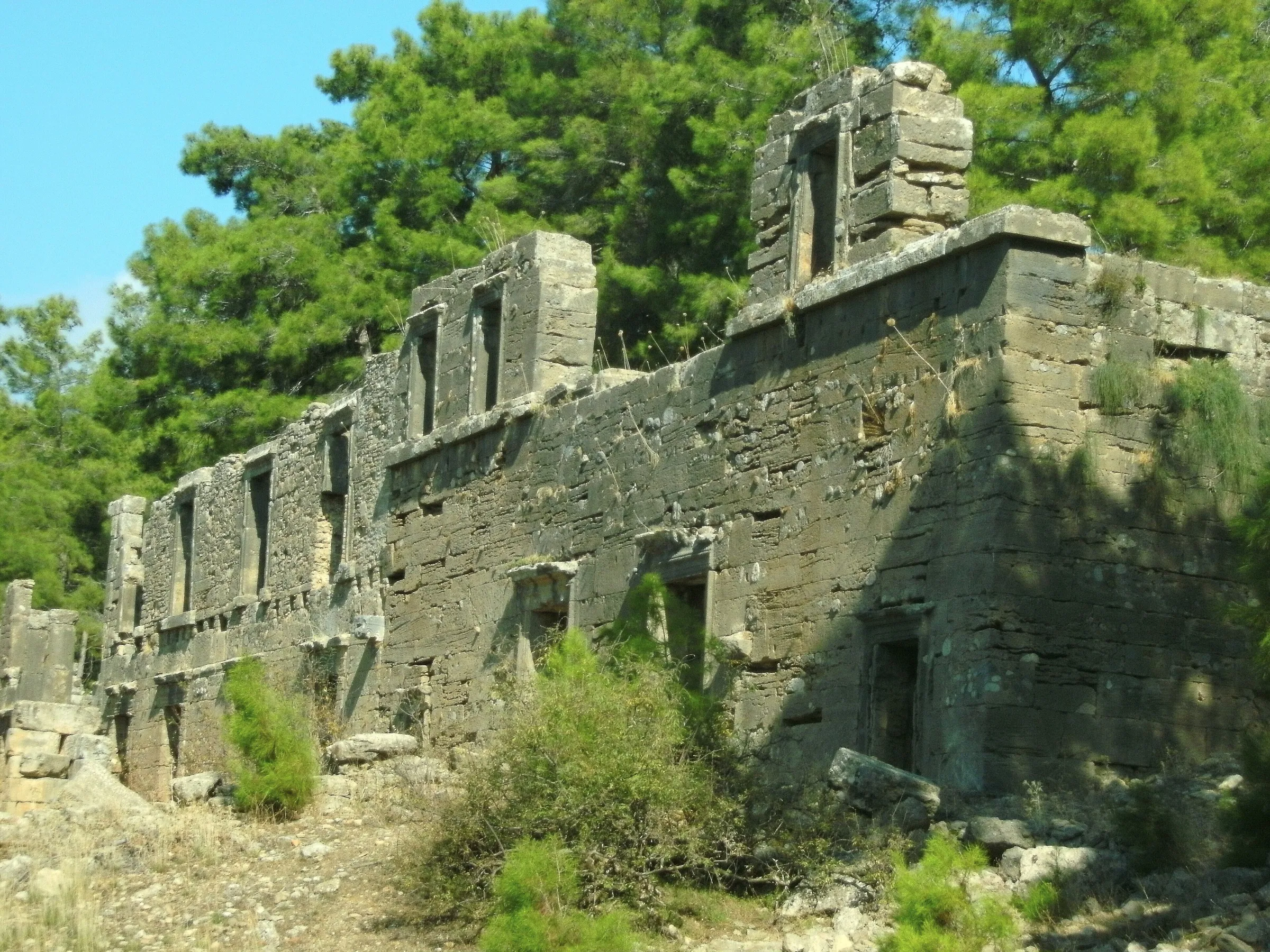
Seleukeia is the ancient city near Side that almost nobody visits, and that is the entire point of going. Fifteen kilometres north of Manavgat, a kilometre above the village of Bucakşeyhler, a Hellenistic-Roman town sits in a pine forest with its two-storey market square still standing — and on most days you will have it to yourself.
It is not a polished site. There is no visitor centre, no café, no gate. You drive a narrow forest track, park where the track ends, and walk into a city that was only rediscovered in the early 1970s.
Seleukeia or Lyrbe?
You will see both names, and it is worth understanding why before someone tells you that you have gone to the wrong place.
When the ruins were rediscovered they were identified as Seleucia in Pamphylia, one of the cities founded around 300 BC by Seleucus I Nicator, Alexander’s general. That is the name on the road signs, in most guidebooks and in the memory of everyone in Manavgat. Later work on inscriptions from the site convinced most scholars that this is actually Lyrbe, a different Pamphylian town, and that Seleucia lay elsewhere. Academic sources and Wikipedia now file it under Lyrbe.
For a visitor it changes nothing about what you see. Ask for Seleukeia locally; read about Lyrbe if you want the scholarship.
What is left, and why it is worth the drive
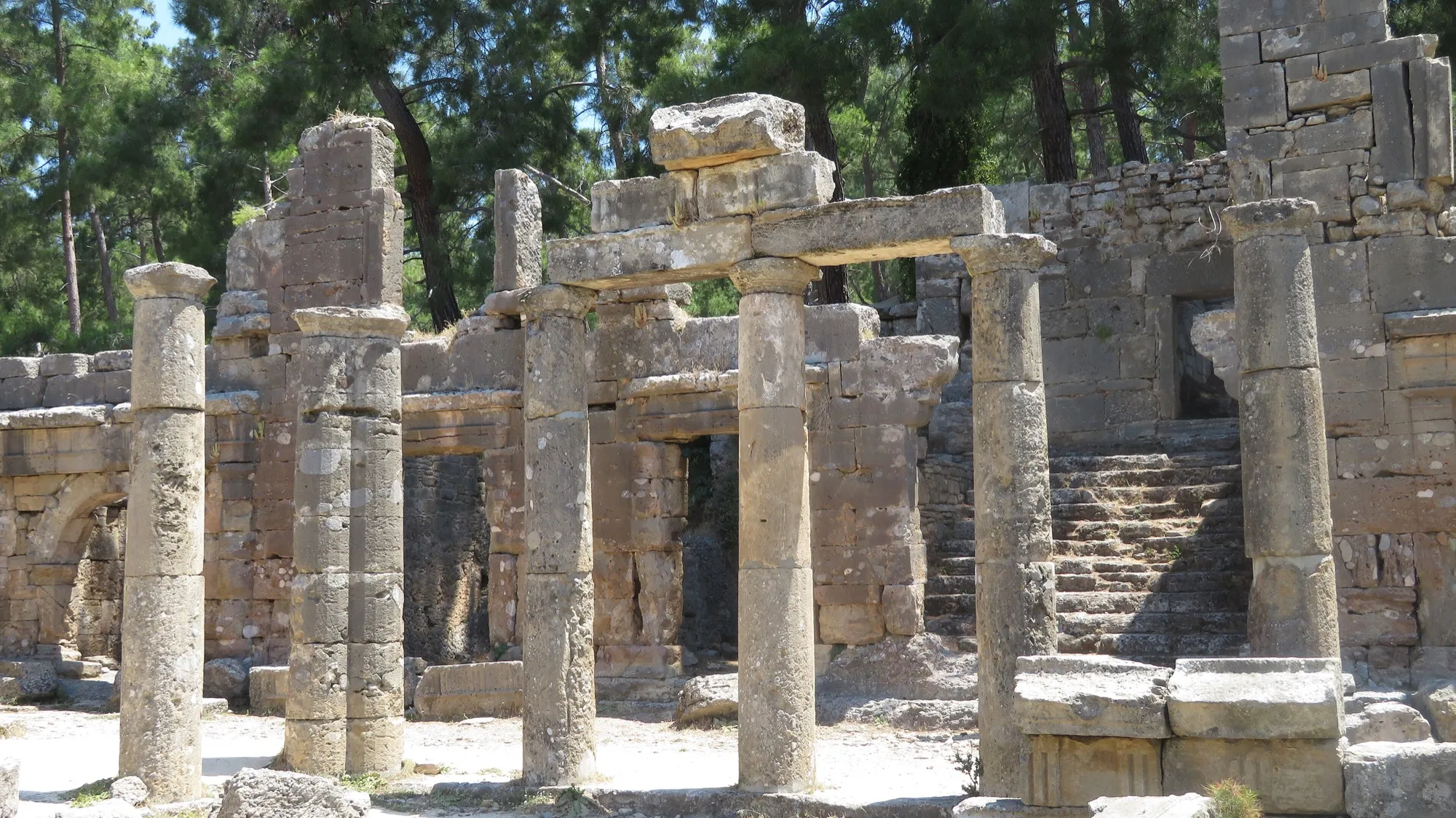

The city had its best years in the 1st and 2nd centuries AD, and what survives is mostly from then.
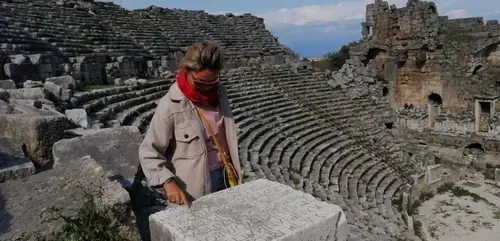
- The agora is the reason to come. A colonnaded square with Doric columns still in place on two storeys, a row of shops behind the colonnade, and storage galleries underneath. Nothing else near Side gives you this sense of a Roman market square as a working space rather than a foundation plan.
- A small odeon off the south-east corner of the agora, six rows of seats cut into the slope — a council chamber or a small concert hall.
- A podium temple, small, with the base of a four-columned porch and a single inner room.
- City walls that reach nine metres in places, an aqueduct line, a mausoleum, Roman baths and a necropolis on the approaches, and the outlines of later churches.
- A mosaic floor still in situ. The famous one — the Seven Sages, with portraits of Solon, Thucydides, Lycurgus, Herodotus, Hesiod and Demosthenes, found in 1978–79 — was lifted and is in the Antalya Museum, which is closed for renovation at the time of writing.
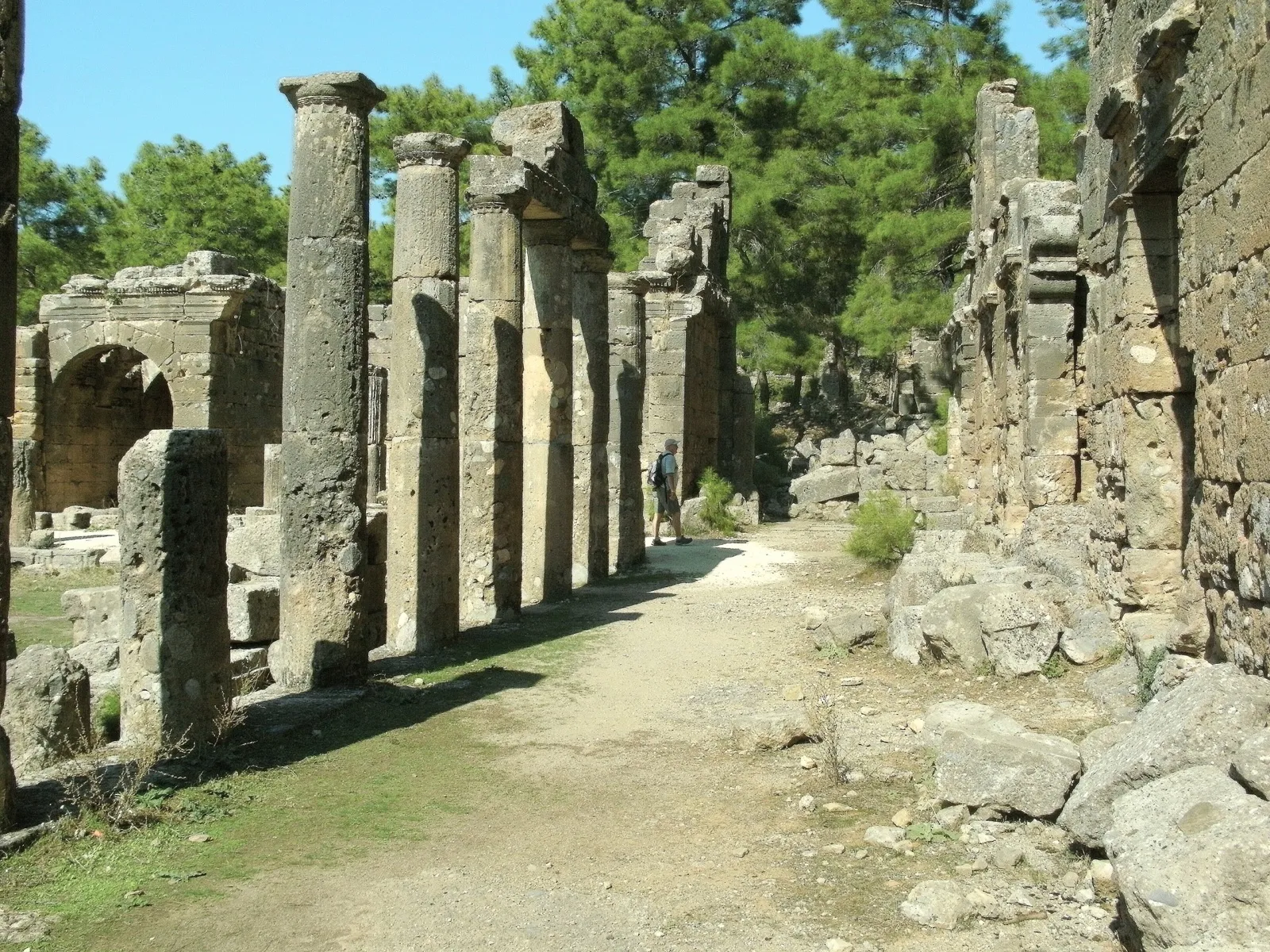

Allow an hour and a half on site, more if you like to sit in a place like this. It is a site for looking and wandering, not for signage: there are few labels, so read this page or a guidebook before you go rather than expecting to be told what you are seeing.
Getting there
From Side you go back through Manavgat and north towards Bucakşeyhler. The tarmac ends at the village; the last stretch is a narrow forest track that is fine for an ordinary car in dry weather, driven slowly. There is no car park as such — you leave the car where the track gives out and walk.
It sits about 7 km from Manavgat Waterfall, so the two combine naturally into a half day: the waterfall early before the coaches, then up into the forest while it is still cool. Public transport will not get you here; it is own car, taxi, or a private day with a driver.
What to expect at an unattended site
Nobody is looking after you here, which is the charm and also the thing to plan for.
- Shade is patchy. The forest around the site is pine and pleasant; the agora itself is open to the sun. In July and August be there by 10:00.
- Footing is rough — collapsed masonry, tree roots, loose stone. Proper shoes, not sandals.
- Bring water and anything else you need. There is nothing to buy.
- No ticket booth in any account we trust, and usually nobody at all. A warden may appear in high season; have a little cash.
- Phone signal is thin under the trees. Download an offline map before you set off.
If you want ruins with a café and a guide, Perge and Aspendos are that. This is the other thing: a Roman town in a wood, quiet enough to hear the pine needles fall.
Book it locally
We run these trips ourselves from our office in Side — same guides, same vehicles, no reseller in between.
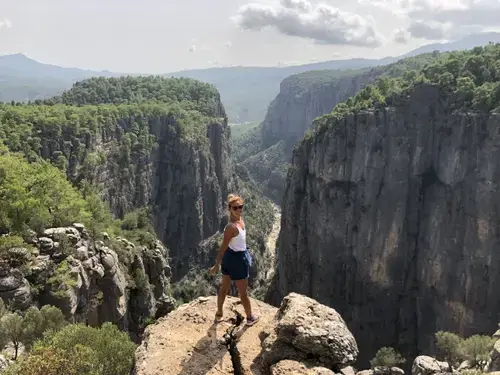
City of Side: Eagle Canyon and Selge Ancient City Day Trip
Price checked on 21 September 2026. Live price on the booking page.Operated by Seven Tours · TÜRSAB 14576
From City of Side: Perge, Aspendos & Kurşunlu Waterfall Trip
Price checked on 21 September 2026. Live price on the booking page.Operated by Seven Tours · TÜRSAB 14576
From city of Side: Antalya Old City and Waterfall Day Trip
Price checked on 21 September 2026. Live price on the booking page.Operated by Seven Tours · TÜRSAB 14576
Seven Tours is our own TÜRSAB-licensed agency (licence 14576). If you book through these links you are booking directly with us, at the same price you would pay at our counter in Side. Price checked on 21 September 2026. Live price on the booking page.
Frequently asked questions
Is it Seleukeia or Lyrbe?
Both names are in use for the same ruins. The site above Bucakşeyhler was identified as Seleucia in Pamphylia when it was rediscovered in the early 1970s, and that is the name on signs and in most guidebooks. Later epigraphic work led scholars to identify it as Lyrbe instead, so academic sources and Wikipedia file it under that name. Ask a local for Seleukeia and you will be pointed the right way.
How far is Seleukeia from Side?
Roughly 30 km and 40 minutes by car: back through Manavgat, north towards Bucakşeyhler, then a short stretch of forest track. It is about 7 km from Manavgat Waterfall, which makes the two an easy pair.
Do you need a ticket for Seleukeia?
There is no ticket booth or turnstile in any recent account we trust, and on most days nobody is there at all. That can change — sites like this sometimes get a warden in high season — so carry a little cash and do not be surprised either way.
What is actually left to see?
More than you would expect for a place this quiet. The agora is the highlight: a two-storey colonnaded market square with Doric columns still standing and a row of shops behind them, with storage galleries underneath. There is a small odeon with six rows of seats on its south-east side, a small podium temple, stretches of wall up to nine metres high, an aqueduct line, baths and a necropolis further out.
Where is the famous mosaic?
The Seven Sages mosaic — portraits of Solon, Thucydides, Lycurgus, Herodotus, Hesiod and Demosthenes — was found here in 1978–79. The portrait panels were lifted and are held by the Antalya Museum, which is currently closed for renovation, so you cannot see them at the moment. A plain mosaic floor remains in place on site.
Keep reading
- Manavgat Waterfall: entrance fee, opening hours and how to get there from Side
What Manavgat Waterfall is actually like, what it costs, when to arrive to beat the coaches, and how to reach it from Side by taxi, dolmuş or tour.
- Temple of Apollo, Side: free to visit, and when to go for the photo
The five columns on Side's harbour are free, ungated and open at all hours. What you are actually looking at, why sunset is crowded and sunrise is not, and how it fits an old-town walk.
- Green Lake (Yeşilgöl) and Gölbaşı Restaurant: the lakeside end of the Green Canyon day
Where the Green Canyon boats leave from, where our jeep tour stops for lunch, and why the water is that colour. Gölbaşı Restaurant, the electric catamaran, and getting there without a tour.